
NRM Economic Reforms and Gains to Protect
The Permanent Secretary and Secretary to the Treasury (PSST) Dr. Ramathan Ggoobi has said Uganda’s economy has all the key ingredients to create wealth and prosperity for all Ugandans, adding that the several economic reforms implemented by the NRM Government over the years have laid a foundation for a transformative, resilient and fast-growing economy.
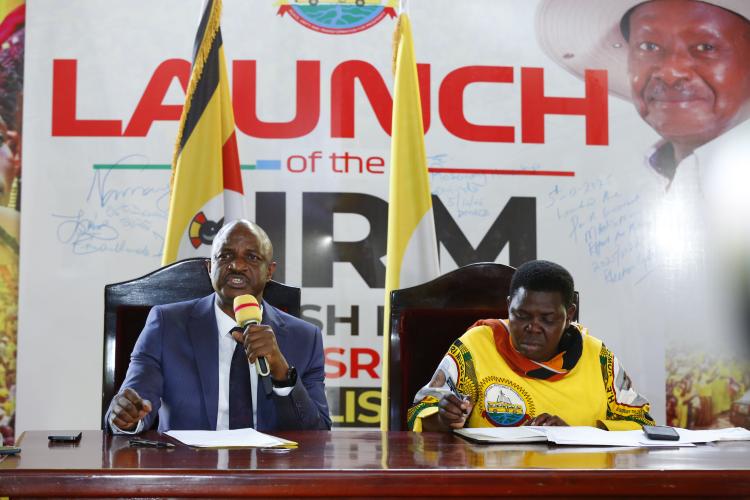
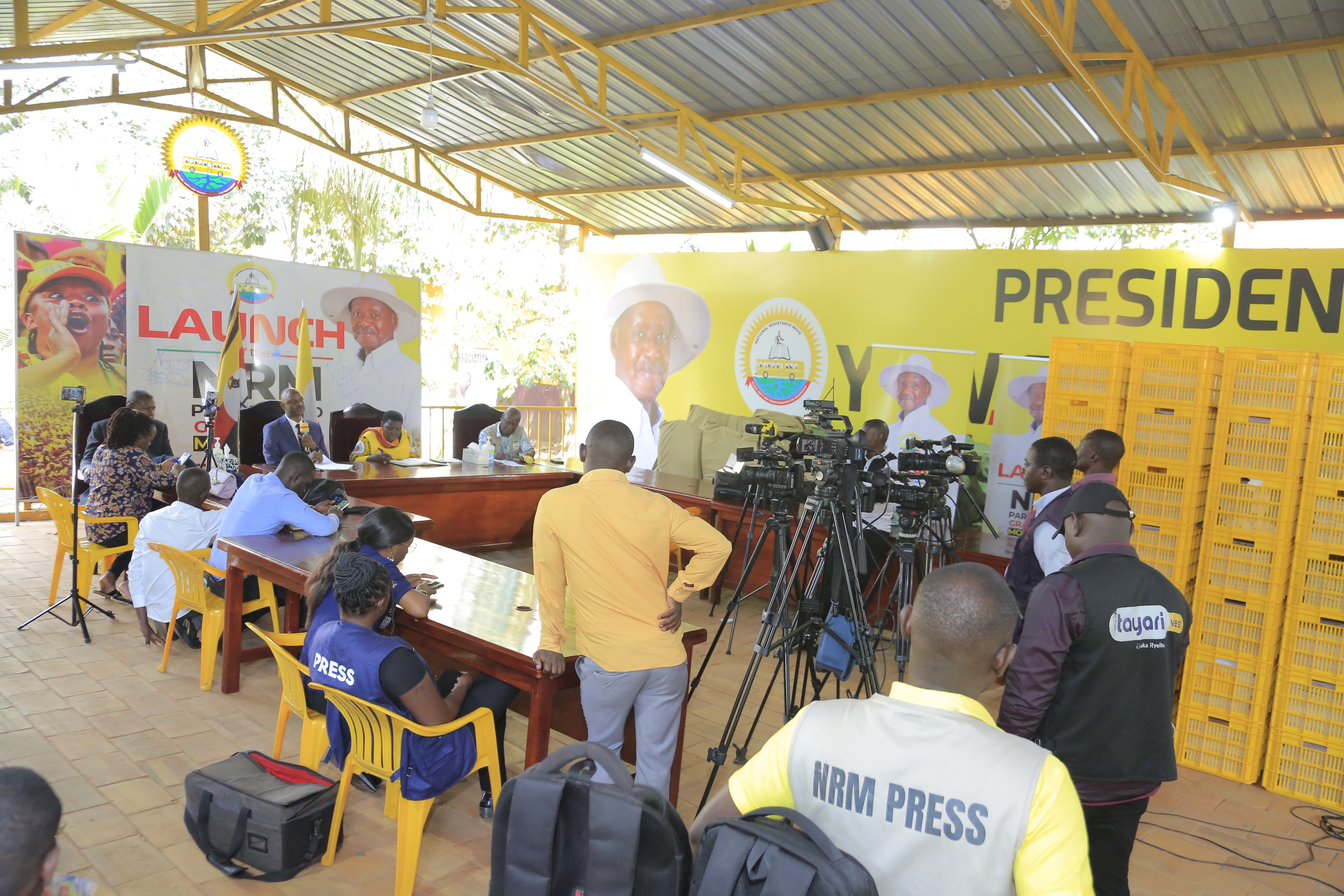
“The NRM Government will continue to take deliberate actions to achieve faster socio-economic transformation, and to strengthen her position in the global economy,” said the PSST. He made the remarks on behalf of Finance Minister Matia Kasaija at the NRM Party Secretariat at Kyadondo Road in Kampala, where he was invited to update the country on the reforms, progress and future direction of Uganda’s economy under the NRM Government.
He said the economic reforms that have provided the building block of the Ugandan economy today include; Elimination of price controls, liberalisation of the economy, liberalisation of the foreign exchange market, liberalisation of the current account and the capital account as well as export diversification, privatization and rationalization of state enterprises among others.
Dr. Ggoobi also highlighted good macroeconomic management to control inflation, creation of Uganda Revenue Authority (URA) and investment in Infrastructure development.
He said the NRM Government actions have created a stable, robust and resilient economy, adding that the size of the economy is projected to have expanded 17 times since 1986.
The PSST said Uganda satisfied has all requirements and is currently undergoing assessment by the UN for graduation to middle income status. Our Per-capita GNP stood at USD 1,278 in FY2024/25 from a low of about USD $570, 10-years ago.
“This is compared to the current benchmark of USD 1,136 for a country to be classified in the lower-middle income category. Our projections indicate that our per-capita income will raise to USD 1,324 by end of FY 2025/26,” said Dr. Ggoobi.
He also said Ugandans are wealthier, noting that poverty declined from 21.4% in 2016 to 16.1% in 2025, while the proportion of households engaged in the subsistence economy fell from 68.9% in 2010 to 33.1% by FY2023/24.
Dr. Ggoobi said Government is committed to expanding the size of the economy to USD 500 billion by 2040 and to create jobs by focusing resources on four anchor sectors (ATMS) and their enablers.
“The NRM Government remains resolute to transform Uganda into a modern, inclusive, and competitive economy that works for all,” he said.
Other Economic Gains under NRM Government
- The shilling has been the most stable currency in Africa. During the FY 2024/25. The Uganda shilling gained value as many other currencies lost theirs.
- Revenue collection doubled in the last 5-years. The total revenue collected increased to Shs 32 trillion in FY2024/25 from Shs 17.6 trillion in FY2019/20.
- Driven by investments in industrial parks, the industrial sector continues to grow. Factories have increased to an estimated 50,000 from 37,559 in 2019/20. Of these, 10,437 are formal of which 690 are located in industrial parks.
- Foreign direct investment (FDI) increased to USD 3.56 billion by end of financial year 2024/25 up from USD 706 million in financial year 2010/11. This is fivefold growth driven by economic certainty, stability and opportunities.
- Exports are vibrant and getting more diversified and sophisticated. Uganda registered a Balance of Payment Surplus of USD 2.37 billion for the year ending October 2025 from a deficit of USD 683 million a year ago. This is the highest in the last 15 years. Total export earnings from goods and services reached USD 13.4 billion in FY 2024/25, of which USD 10.6 billion was earned from export of goods only.
- Remittances from Ugandans abroad reached USD 1.6 billion (Shs 5.76 trillion) in FY 2024/25, from USD 1.1 billion in FY 2020/21.
- Uganda has increased her capacity to power the industrialisation agenda and connected more Ugandans to the grid. Electricity generation capacity rose to 2,051 MW in 2024 from 1,839.4 MW in 2019, with completion of flagship projects like Karuma, Isimba and other electricity generating facilities.
- Tourists have renewed optimism. Tourism earnings reached USD 1.7 billion in fiscal year 2024/25. This impressive growth is attributed to the sustainable peace, increased competitiveness of Uganda’s tourism industry and Government investment in strategic tourism infrastructure, including Uganda Airlines.
- In the past ten years, government has invested over Shs 11 trillion in key wealth creation initiatives. These initiatives have contributed to poverty reduction from 56.4% in 1992 to 16.1% in 2024 and cut the number of households in subsistence economy by more than half from 68% in 2014 to 33% in 2024.
- There is increased trust in the Uganda economy. The Business Tendency Index (BTI) consistently remained above the optimism indicative threshold of 50 at 57.2 over the last 5-years. This means that investors are very optimistic about the economy.