The Second UGIFT2.0 Program Design Consultative Mission Outcome
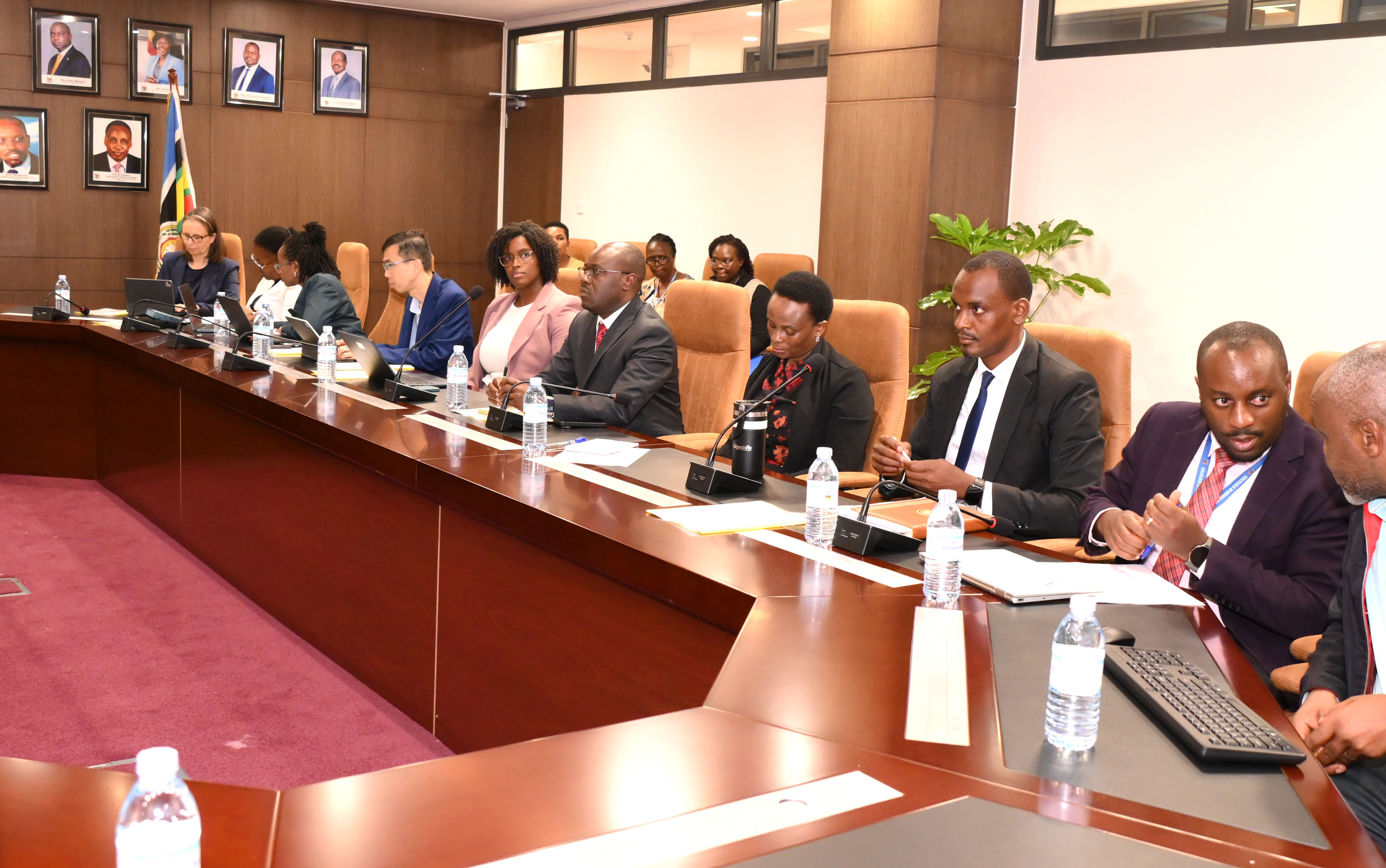
The Ministry of Finance, Planning and Economic Development spearheaded UgIFT2.0 mission design technical consultative in collaboration with all the frontline Government implementing institutions together with the World Bank to identify, design reforms that will unlock the role of institutions and public finance in local service delivery.
The workshop was organised to inform reform design related to outcomes in the areas of Fiscal decentralization and over all financing of service delivery in Education, Health, Water, supply and Sanitation, Micro-Scale Irrigation, local employment and how to resolve key bottlenecks to local service delivery.
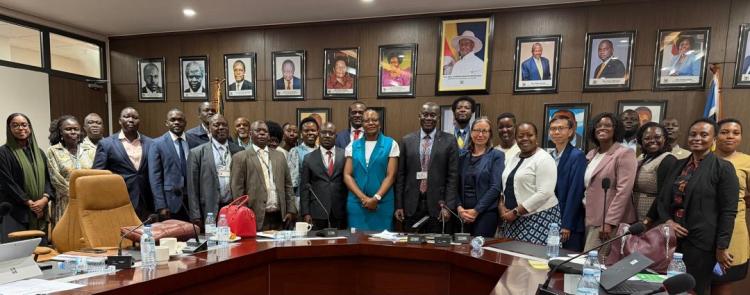
Wrapping up the mission exercise with the steering committee members, Acting Director Budget Hannington Ashaba represented the Permanent Secretary and Secretary to the Treasury to deliver his closing remarks. The Director acknowledged with sincere appreciation the leadership, participation, and commitment demonstrated by the Permanent Secretaries, Heads of Institutions, representatives of the World Bank, and all the technical teams for their valuable contributions to these highly technical working engagements undertaken.
He observed the growing synergy across institutions and levels of implementation is exactly what is needed to strengthen coordination, improve implementation, and deliver better results. This is the true spirit of programme-based implementation and collective Government action.
"From the briefs presented and the discussions held, it is clear this mission has provided an important opportunity for Government and its partners to reflect more deeply on the broader service delivery challenges affecting implementation, the bottlenecks that continue to constrain results, and the critical reforms as well as investments required to strengthen decentralized social service delivery," he said.
“I am particularly encouraged for the grounded consultations with participation from both Central Government institutions and Local Governments. This gives me confidence, that the programme design is increasingly being shaped by the realities of implementation and by a shared understanding of the reforms that are needed," said Ashaba.
He further emphasized that UgIFT remains a strategic Government platform for strengthening decentralized service delivery through reforms in both financing and service delivery systems.
Ashaba said it is not simply a mechanism for financing investments, but a broader reform instrument intended to improve the allocation of resources, strengthen the functioning of service delivery systems, and ensure that public expenditure translates into better services and improved outcomes for our people.
He said UgiFT2.0, must fully align with the National Development Agenda, the Tenfold Growth Strategy, National Development Plan, and the service delivery pillars of the Parish Development Model,adding that its design and implementation should promote programmatic complementarities and coordination across all implementing programmes, sub-programmes and institutions, rather than a siloed approach.
The Director acknowledged the progress registered during UgIFT 1.0 implementation and challenges emphasizing that the lessons learnt should be considered in strengthening the design of the successor programme.
"I am confident the design team is reflecting carefully on some of the design shortcomings experienced under the first phase, especially where certain Disbursement-Linked Indicators (DLIs) and related actions had to be restructured midway through implementation," he said adding that in several cases, this was because some of the targets were more ambitious than what could realistically be delivered within the programme scope and implementation period.
He said the Ministry of Finance, Planning and Economic Development commit to provide the necessary support to facilitate these engagements and to ensure that the process moves forward in a well-coordinated, focused, and effective manner.
The Permanent Secretary Ministry of Education and Sports, Dr Kedrace Turyagenda called on the implementation technical team to prioritize transformative game-changing reforms as a prerequisite for UGIFT2.0 to achieve the profound impact witnessed under its predecessor program.
She challenged the officers to exercise creativity in the program’s design implementation, cautioning that replicating previous approaches would inevitably yield the same outcomes — underscoring the need for bold and innovative thinking.

She further emphasized the imperative of a whole-of-government approach in the implementation of government objectives, noting that several key education sector objectives had been assessed as having only medium feasibility ratings. She stressed that such classification was unacceptable, as it rendered critical objectives effectively unachievable.
The World Bank task team leader, Barbra Magezi commended the work done by government and different stake holders. She acknowledged the impact created in UgiFT1.0 noting that the Bank is working to reduce the many disbursement linked indicators by scaling down from 25 to 10 or less.
Magezi said engagements with different sectors for consensus and agreement on the final scope and theory of change will be in the next phase,which will lead to the development of a concept note aligned to the objectives.
By July August, another mission will be held to finalize this process and give the Bank time process the appraisal and negotiations of UgiFT2.0. The Banks' target is to have the program approved by December 2026.