

Musasizi Urges Capital Markets to Mobilise Long-Term Capital
Finance Minister Henry Musasizi has urged Uganda’s capital markets to take on a bigger role in mobilising the long-term capital required to finance the country’s economic transformation, saying the ambition of building a US$500 billion economy by 2040 cannot be achieved through Government expenditure and bank financing alone.
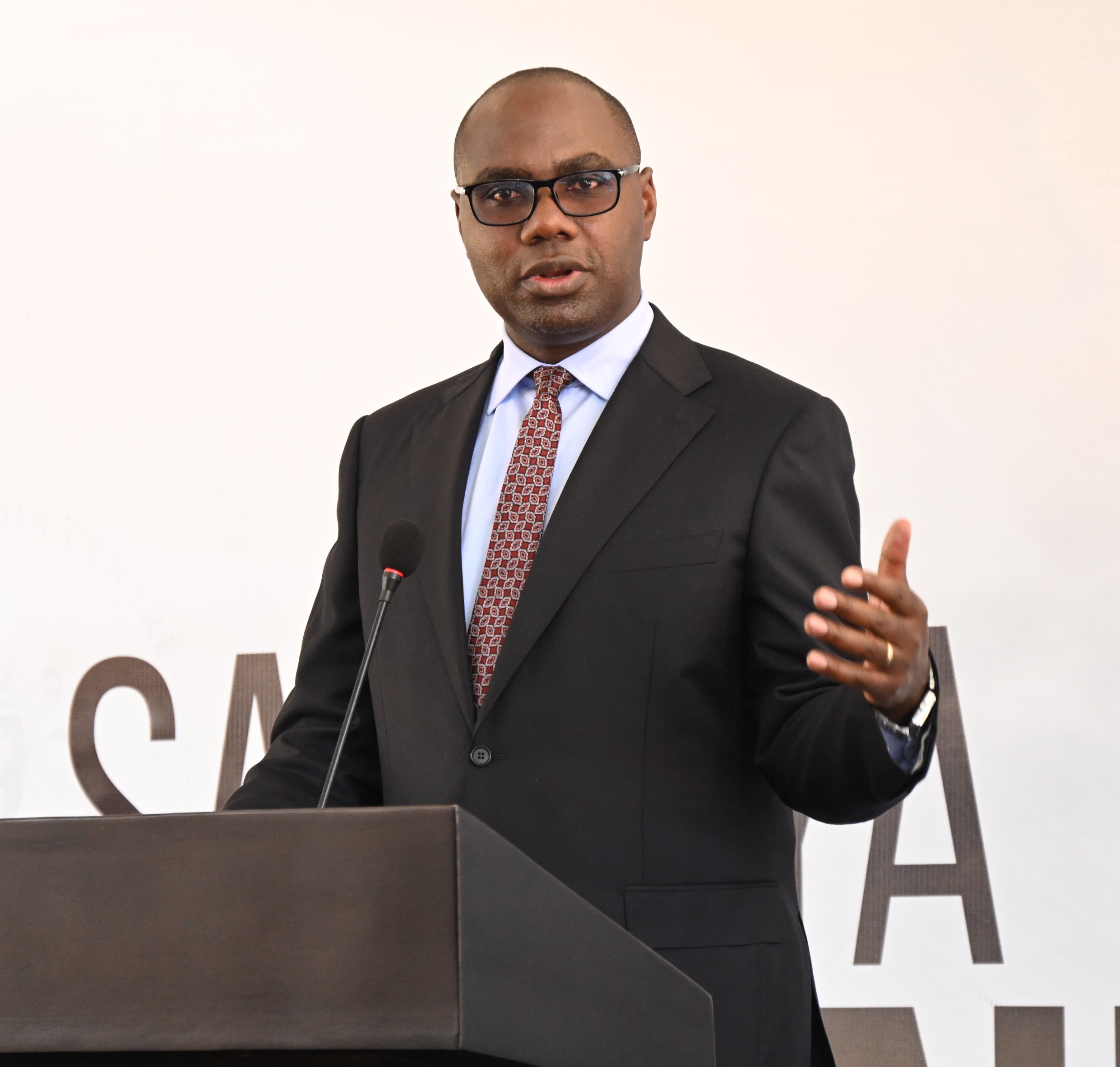
Speaking at the launch of the Capital Markets Authority (CMA) @30 anniversary celebrations at the Uganda Media Centre, Musasizi said Uganda’s capital markets must play a bigger role in financing the next phase of the country’s economic transformation, as the country pursues its ambition of building a US$500 billion economy by 2040.
The CMA was established in 1996 when Uganda’s capital markets were still at an early stage of development. According to Musasizi, the immediate challenge at the time was to create confidence in a market that was unfamiliar to most Ugandans, establish the necessary rules and institutions, protect investors and gradually build a culture of formal investment.
Three decades later, he said, Uganda has an established capital-markets ecosystem comprising securities exchanges, brokers, fund managers, investment advisers, custodians, trustees, collective investment schemes and other market participants.
“Thirty years is a significant milestone in the life of any institution,” Musasizi said, noting that the anniversary provides an opportunity to celebrate what has been achieved, acknowledge those who laid the foundations, reflect on lessons from the past and determine what needs to be done differently to meet future demands.
Capital markets and the $500bn ambition
Musasizi said Uganda is now at a defining point in its economic transformation, with Government pursuing the Tenfold Growth Strategy and an ambition to build a US$500 billion economy by 2040.
That ambition, he said, requires a fundamental change in the scale and quality of investment, production, exports, savings and private-sector activity.
“It will require enormous amounts of long-term capital,” he said.
The Minister said Uganda will need to finance infrastructure, industrialisation, commercial agriculture, tourism, energy, housing, manufacturing, technology, innovation and the expansion of Ugandan enterprises, as well as new businesses and technologies that will shape the economy in the coming decades.
By August 2026, domestic market capitalisation stood at Shs 24.28 trillion, while the corporate bond market had mobilised about Shs 290 billion. Collective Investment Schemes had about Shs 7.08 trillion in assets under management.
Musasizi said these figures demonstrate that Ugandans are increasingly participating in formal investment, businesses are accessing alternative sources of finance and the capital market is becoming a more important channel for mobilising long-term capital.

From saving to investing
The Minister said one of Uganda’s major opportunities is to build a stronger culture of saving and, importantly, convert those savings into investment. “Saving is the first step. Investment is what turns savings into productive capital,” he said.
He said no Ugandan should lose hard-earned savings simply because they did not understand the investment product they were purchasing. Investor protection, he added, must remain at the heart of capital-markets development.
The regulator must continue strengthening disclosure, market surveillance, enforcement, corporate governance and public awareness so that investors can have confidence that the market is fair, transparent and properly supervised.
CMA targets wider participation
CMA Chief Executive Officer Josephine Okui Ossiya said the Authority had grown from a small institution with a big idea into an institution carrying a much bigger responsibility.
The original idea, she said, was that Uganda could build a market where savings could become investments, businesses could raise long-term capital, ordinary Ugandans could participate in wealth creation and capital could help finance national development.
Ossiya said the responsibility of the current generation is to build on the foundations established over the past three decades and scale the market.
She said the first year of CMA’s new five-year strategic plan had produced encouraging results. Of the 43 strategic indicators tracked by the Authority, 63% were achieved or exceeded, while work-plan implementation stood at 99.5%.
She said assets under management in Collective Investment Schemes had reached approximately Shs 7 trillion, while total funds mobilised through capital markets had reached approximately Shs 23.4 trillion.
Public understanding of capital markets had risen to 60.8%, while CIS investor accounts had grown to 241,000. Domestic capitalisation of the Uganda Securities Exchange had surpassed Shs15 trillion, segregated fund assets had exceeded Sh6 trillion and CMA was regulating more than 160 licensed market participants.
Ossiya said the Authority’s ambition is to grow funded Collective Investment Scheme accounts to one million.
She said financial inclusion must now move beyond access to bank accounts and mobile money to investment inclusion, where Ugandans can invest, own assets and build wealth.
Expanding investment products
Ossiya said a mature capital market must provide investors with a wider range of investment opportunities beyond Government securities.
CMA therefore wants to accelerate development of instruments including real estate investment trusts, infrastructure bonds, green bonds, asset-backed securities, private capital solutions and Islamic finance instruments.
She said the Authority is particularly committed to supporting Uganda’s first sovereign Sukuk to widen the pool of investors who can participate in financing Uganda’s development, open the market to new sources of global capital and enable Ugandans to participate in the growing global Islamic finance ecosystem.
CMA also wants to strengthen the supply side of the market by ensuring there are enough quality investment opportunities for the savings being mobilised.
Addressing market liquidity
Ossiya identified liquidity as one of the major challenges facing Uganda’s capital markets, particularly thin equity-market liquidity. She said investors need to be able to enter and exit positions efficiently for the market to function effectively.
CMA therefore wants action on three fronts: more securities, more investors and better mechanisms for bringing the two sides of the market together. This includes market-making, liquidity-enhancement programmes and modern market infrastructure.
She said the objective is not simply to have capital markets that exist, but a capital market that works.
Building on 30 years
Dr Japheth Katto, CMA’s first CEO, recalled the early years of the Authority, saying that when he joined in 1998, two years after its establishment, the institution was being run by a team seconded from Bank of Uganda and did not yet have its own staff.
He said the early task was to build the institution’s infrastructure, staff capacity, awareness and understanding of a new industry.
Looking back, Katto said CMA’s greatest achievement was not any single initial public offering or regulation, but proving that a capital market could work in Uganda.
He described the institution’s development as a relay, with different generations carrying the baton and building on the work of those who came before them.
His message to the current generation was to “build on what has been built, protect what must be protected and challenge what must change.”
Former CMA CEO Keith Kalyegira said the next phase should not be measured only by more listings, regulations or capital mobilisation, but by whether more businesses are actually financed through the capital markets.
He said capital markets should become a genuine alternative source of capital for businesses seeking to finance growth.