
FY2027/28 Budget to Focus on Jobs, Exports and Household Incomes
Government will place job creation, export growth and rising household incomes at the centre of the Financial Year 2027/28 Budget as it seeks to accelerate Uganda’s transformation through commercial agriculture, industrialisation, services, digital transformation and expanded market access.
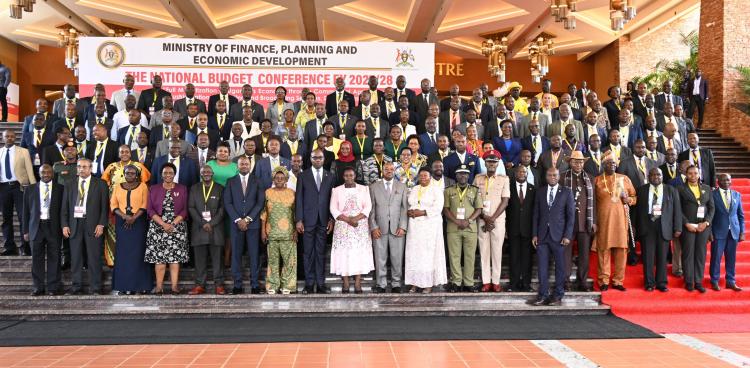
Presenting the Budget Strategy for FY2027/28 at Speke Resort and Convention Centre, Munyonyo, on September 10, 2026, the Minister of Finance, Planning and Economic Development, Hon. Henry Musasizi, said the strategy would deepen implementation of the Tenfold Growth Strategy, the Fourth National Development Plan and the National Resistance Movement Manifesto for 2026–2031.
The budget theme is “Full Monetisation of Uganda’s Economy through Commercial Agriculture, Industrialisation, Expanding and Broadening Services, Digital Transformation and Market Access.”
Musasizi said the budget would prioritise production, productivity and access to markets while financing a larger share of development through domestic revenues and private capital.
“New borrowing will increasingly be reserved for investments with demonstrable economic returns, while concessional resources already contracted will be absorbed more rapidly,” he said.
The strategy is anchored on seven shifts: revenue-led fiscal consolidation; prudent management of oil revenues; mobilisation of private capital; faster implementation of the Agro-Industrialisation, Tourism Development, Mineral-Based Industrial Development and Science, Technology and Innovation programmes; stronger focus on jobs, exports and household incomes; expansion of wealth creation programmes; and enforcement of budget reforms.
Musasizi said every public investment must demonstrate measurable economic and social returns.
“How many productive jobs will it create? How much will it increase exports or save foreign exchange? How much private investment will it crowd in? And how much will it raise productivity and household incomes?” he asked.
To finance the strategy, Government will implement the Domestic Revenue Mobilisation Strategy while containing non-priority expenditure and borrowing. It will pursue foreign direct investment, equity partnerships, joint ventures, infrastructure bonds, Islamic and climate finance, philanthropy, project finance and public-private partnerships.
Tax mobilisation will be strengthened through the Electronic Fiscal Receipting and Invoicing System (EFRIS), the Digital Tracking Solution, improved data-sharing and stronger enforcement. Government also plans to establish a Central Inland Container Depot to improve import verification and tax assessment before goods are distributed to private inland container depots.
Other measures include taxation of digital economy transactions, stronger taxation of gold and minerals, improved tracking of transit cargo, faster settlement of tax disputes, review of disadvantageous double-taxation agreements and use of National Identification Number (NIN), business registration and financial data to improve compliance.
Tax collections have increased from Sh16 trillion in FY2019/20 to Sh36 trillion in FY2025/26. However, the tax-to-GDP ratio remains low at 14.3%, limiting fiscal space.
Government will also improve the use of existing financing. Concessional loans had an absorption rate of only 45.5%, leaving about US$5.51 billion undisbursed by December 2025. The loan portfolio will be cleaned up, while land acquisition, procurement and counterpart funding will be accelerated. Persistently non-performing projects may be restructured or cancelled.
The economy grew by an estimated 6.4% in FY2025/26, compared to 6.3% the previous year. Nominal GDP rose to Sh250.4 trillion (US$69.35 billion) from Sh227.9 trillion (US$61.99 billion). Goods and services exports reached US$18.42 billion, including merchandise exports of US$15.75 billion, while foreign direct investment stood at US$3.24 billion. Tourism receipts reached US$1.7 billion, and remittances totalled US$3.03 billion.
Growth is projected at 10.2% in FY2026/27, supported partly by expected commercial oil and gas production, with medium-term growth targeted at an average of at least 7%.
The strategy prioritises agro-industrialisation, tourism, minerals and oil and gas, science and technology, infrastructure, irrigation, wealth creation funds and regional export markets. It also provides for investment in roads, the Standard Gauge Railway, energy, Uganda Airlines, irrigation, health, education, water and sanitation, justice and environmental protection.
Oil revenues will be managed cautiously. The transfer to the Consolidated Fund will be capped at 0.8% of the previous year’s non-oil GDP, with the balance placed in the Petroleum Revenue Investment Reserve to strengthen non-oil productivity and competitiveness.
Implementation will be guided by the Charter for Budget Discipline and Accountability, which prohibits commitments without budget provision, accumulation of arrears and commencement of projects that are not ready.
“The ultimate objective is to ensure that every shilling of public resources contributes directly to the Tenfold Growth Strategy and full monetisation of Uganda’s economy,” Musasizi said.
Uganda Can Raise Revenue to More than 25% of GDP – Museveni
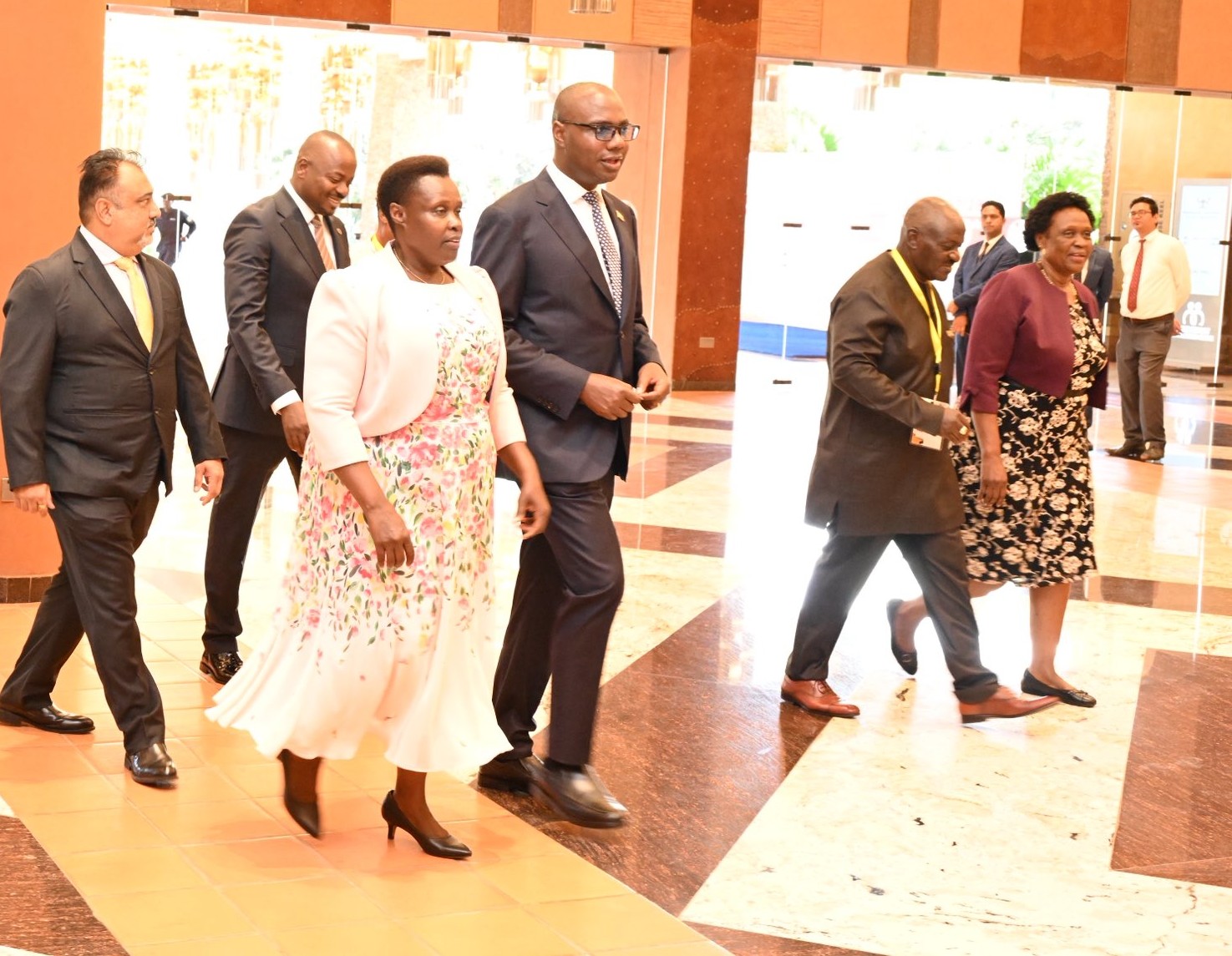
Vice President Jessica Alupo, representing President Yoweri Museveni, opened the National Budget Conference for FY2027/28, where the President’s speech challenged Government to increase domestic revenue collection from the current level of about 14% of Gross Domestic Product (GDP) to more than 25%, saying the move would enable Uganda to finance its development without relying heavily on borrowing.
“We collect only about 14% of GDP in our tax revenue. We have the ability to collect more than 25% of our GDP in revenue and therefore fully finance our development without having to borrow,” President Museveni said in his speech.
He attributed the revenue shortfall partly to leakages in the Uganda Revenue Authority (URA), urging the institution to use technology to strengthen collections and close loopholes.
The President said increased domestic revenue would support Uganda’s transition from economic growth to faster socio-economic transformation. He noted that the country’s nominal GDP has reached Sh250.4 trillion, equivalent to US$69.35 billion, while Gross National Income per capita has risen to US$1,389, above the lower-middle-income threshold of US$1,136.
He also highlighted Uganda’s sustained long-term economic growth of more than 5% despite repeated global shocks, the near doubling of exports over the past five years, expanded access to health and education services, improved infrastructure and the establishment of a foundation for industrialisation and manufacturing.
President Museveni, however, said about 30% of Ugandans remain in the subsistence economy. He said the Parish Development Model (PDM) and other wealth creation programmes were addressing the capital constraint, noting that more than 30% of parishes had been fully served, with households in those parishes receiving at least Sh1 million invested in wealth creation activities.
He identified three remaining constraints to household transformation: dependence on rainfall, limited value addition and inadequate access to markets.
The President directed Government to scale up micro and small-scale irrigation schemes, particularly solar-powered irrigation, to reduce dependence on unreliable weather patterns. He also called for support to parish economies to add value to commodities and access high-value markets.
He said Uganda’s transformation agenda would continue to focus on commercial agriculture driven by irrigation, industrialisation for value addition, expanded critical services and market access.
President Museveni further recognised the contribution of development partners, civil society, academia, the media and the private sector. He said Government was addressing private-sector concerns, including taxation, the cost of electricity and non-tariff barriers affecting cross-border trade.
He urged businesses to utilise the peaceful environment, Government wealth creation programmes and available financing windows to expand their operations and contribute to the national ambition of building a US$500 billion economy.
Government Tightens Fiscal Discipline Ahead of FY2027/28 Budget
Government will continue prioritising prudent public debt management, domestic revenue mobilisation and stronger accountability as it prepares the FY2027/28 national budget.
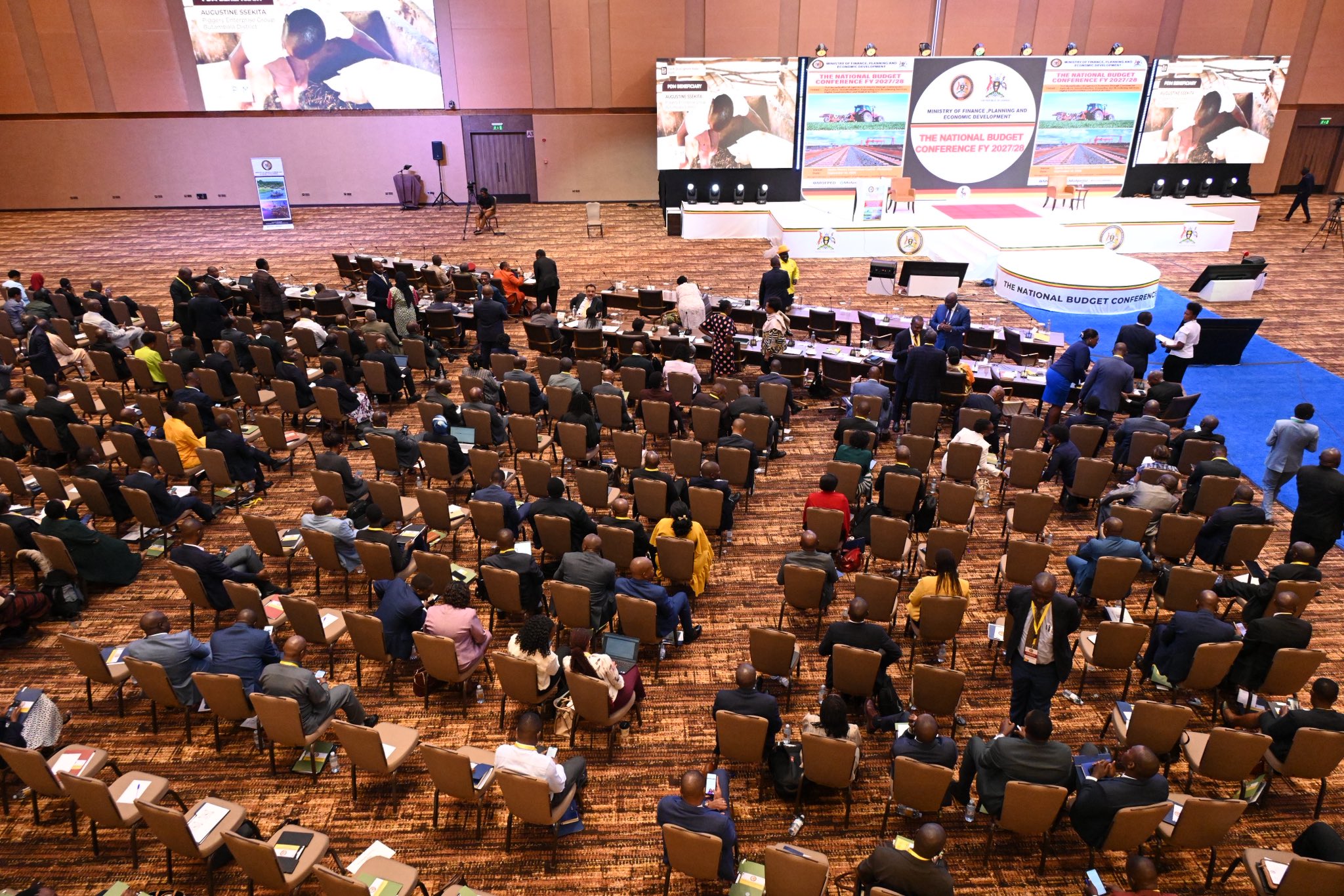
The message was delivered by Patrick Ocailap, the Deputy Secretary to the Treasury, who represented the Permanent Secretary/Secretary to the Treasury, Ramathan Ggoobi, at the National Budget Conference held at Speke Resort and Convention Centre, Munyonyo.
Reviewing priorities agreed during the previous budget conference, he said Government had continued to direct resources towards the Agro-Industrialisation, Tourism, Minerals and Science, Technology and Innovation (ATMS) priorities and their enablers.
On public debt, he said, “Uganda’s public debt remains sustainable at 54.0% as at end of FY2025/26 and is expected to remain stable in the medium term.”
On petroleum revenues, the PSST’s remarks indicated that Sh1.4 trillion would be drawn from the Petroleum Fund during FY2026/27 to finance critical infrastructure enablers, including roads and railway development.
Ocailap also highlighted reforms aimed at improving Government operations such as the e-Procurement system that has been launched and rolled out to improve efficiency and transparency in public procurement.
In addition, the Human Capital Management System under the Ministry of Public Service has been integrated with the Integrated Financial Management Information System (IFMIS). The integration is intended to address the misappropriation of salaries, pensions and gratuities.
The Budget Discipline and Accountability Charter has also been integrated into performance contracts for Accounting Officers which is intended to promote professionalism, integrity and accountability while addressing budget games, accumulation of arrears and supplementary budgets.
“With oil revenues starting to come in, and our emphasis on domestic revenue mobilisation to drive the budget, we are looking towards an even faster growth with gainful jobs,” said Ggoobi.