
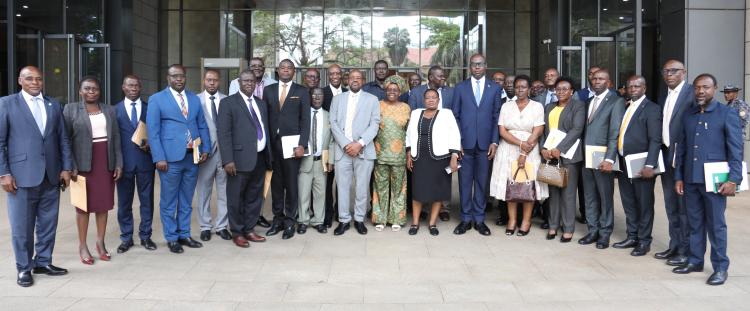
Finance Minister Presents Budget Strategy for FY 2027/28 at Launch of PACOB
Finance Minister Henry Musasizi presented the FY2027/28 Budget Strategy during the launch of the Presidential Advisory Committee on Budget (PACOB) by the Prime Minister Robinah Nabbanja.
The strategy provides policy direction for preparation of the national budget and deepens implementation of the Tenfold Growth Strategy, the Fourth National Development Plan, the NRM Manifesto 2026–2031 and the Charter for Fiscal Responsibility.
The budget theme remains: “Full Monetisation of Uganda’s Economy through Commercial Agriculture, Industrialisation, Expanding and Broadening Services, Digital Transformation and Market Access.”
Prime Minister launched the Presidential Advisory Committee on Budget (PACOB) at the Prime Minister’s Office urging members to identify priorities within priorities and ensure public resources deliver measurable results.
She tasked members to scrutinise programme and sector priorities, test proposals against the available resource envelope and advise Government on what should be funded first, rather than merely endorsing submissions.
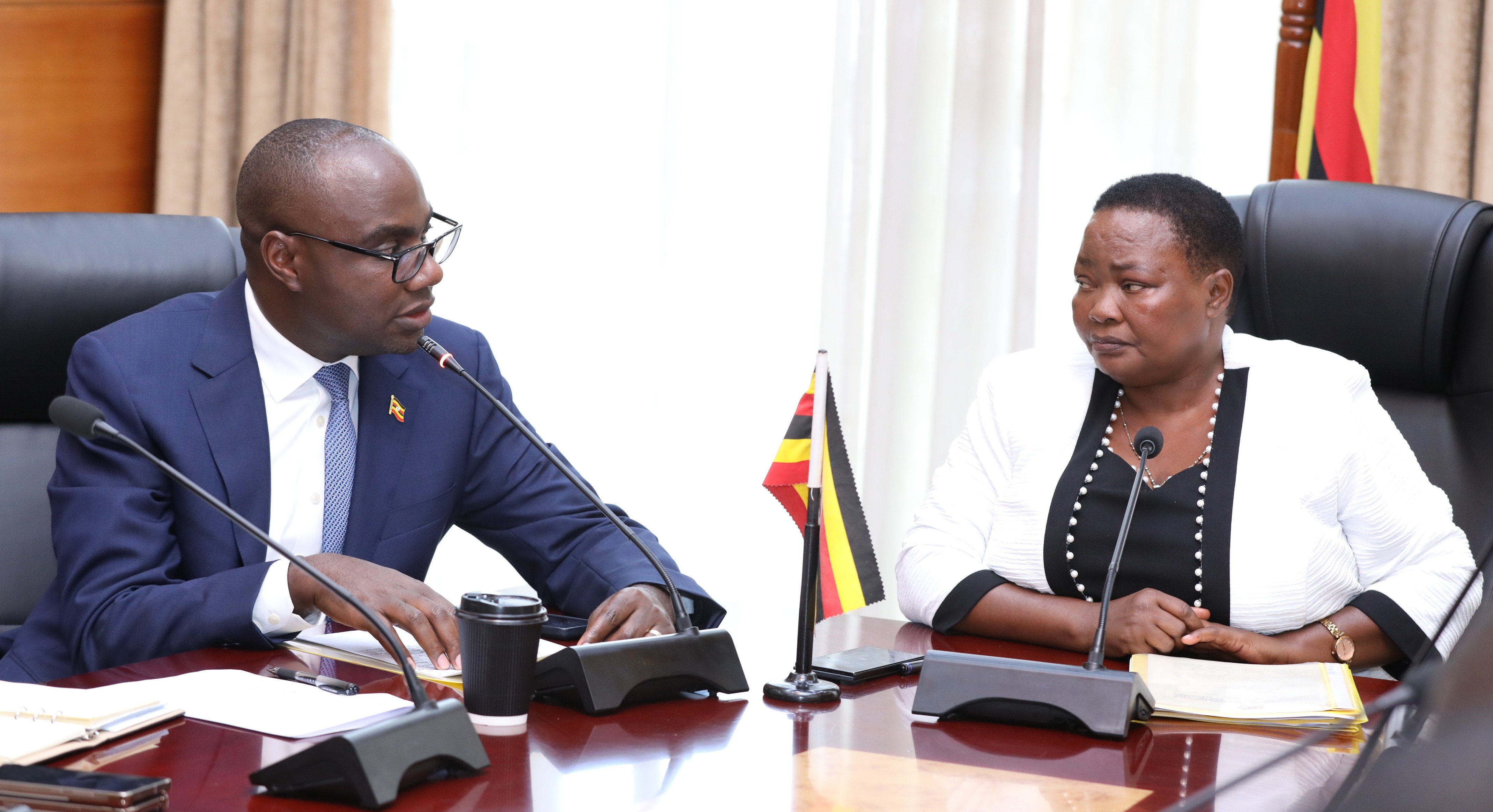
The Prime Minister identified strategic roads and the Standard Gauge Railway, reliable and affordable electricity, irrigation, oil and gas infrastructure, digital connectivity, science, technology and innovation, exports, jobs and household incomes among the areas requiring attention.
She called for four tests in assessing budget proposals: strategic alignment, evidence of results, implementation readiness and value for money.
She directed the Office of the Prime Minister, as PACOB Secretariat, to track accepted recommendations through budgeting and implementation, with a concise action report by November 30.
Musasizi said the economy is projected to grow by 7.6% in FY2026/27 and 9.1% in FY2027/28, driven principally by the expected commencement of commercial oil and gas production and its wider linkages to construction, services, manufacturing and exports.
The preliminary FY2027/28 resource envelope stands at Sh79.22 trillion, down from Sh84.39 trillion in FY2026/27.
The strategy prioritises agro-industrialisation, tourism, mineral-based industrial development, science, technology and innovation, alongside infrastructure, irrigation, industrial parks, wealth creation funds, regional integration and export markets.
Government will also focus on domestic revenue mobilisation, private capital, PDM enterprise sustainability, loan recovery, value-chain development and measurable increases in household incomes.